Starting a Business

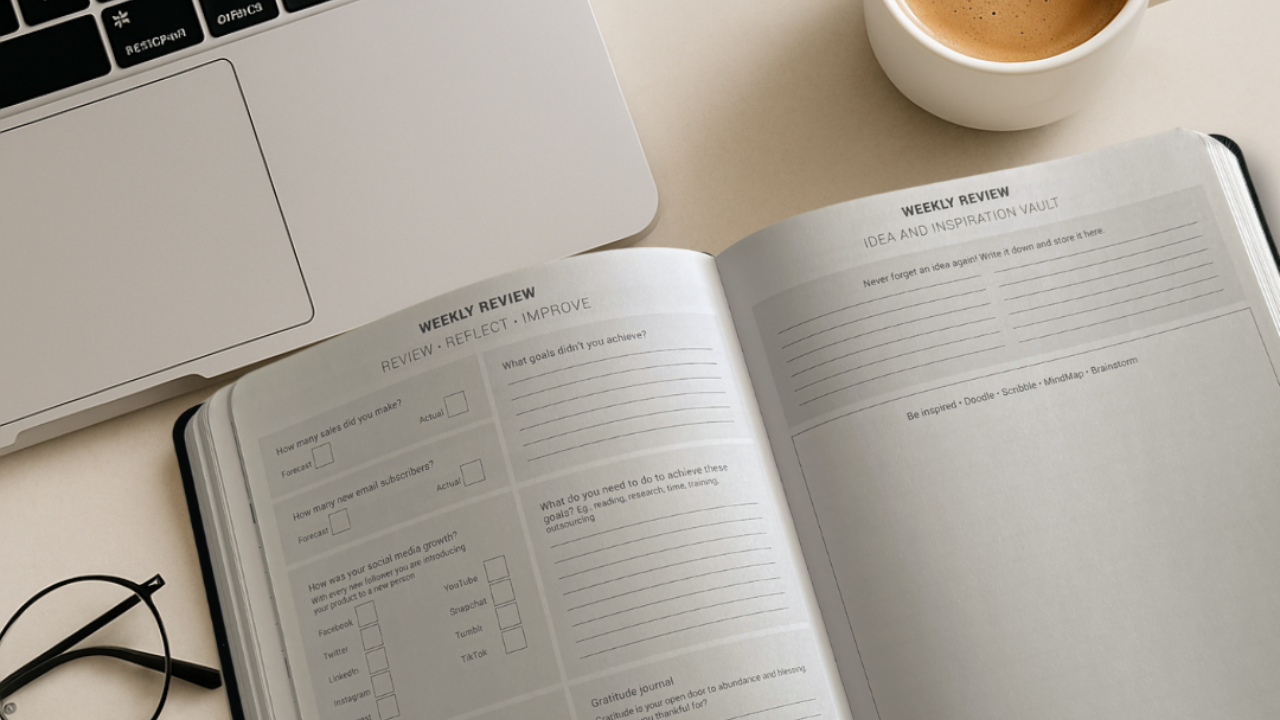
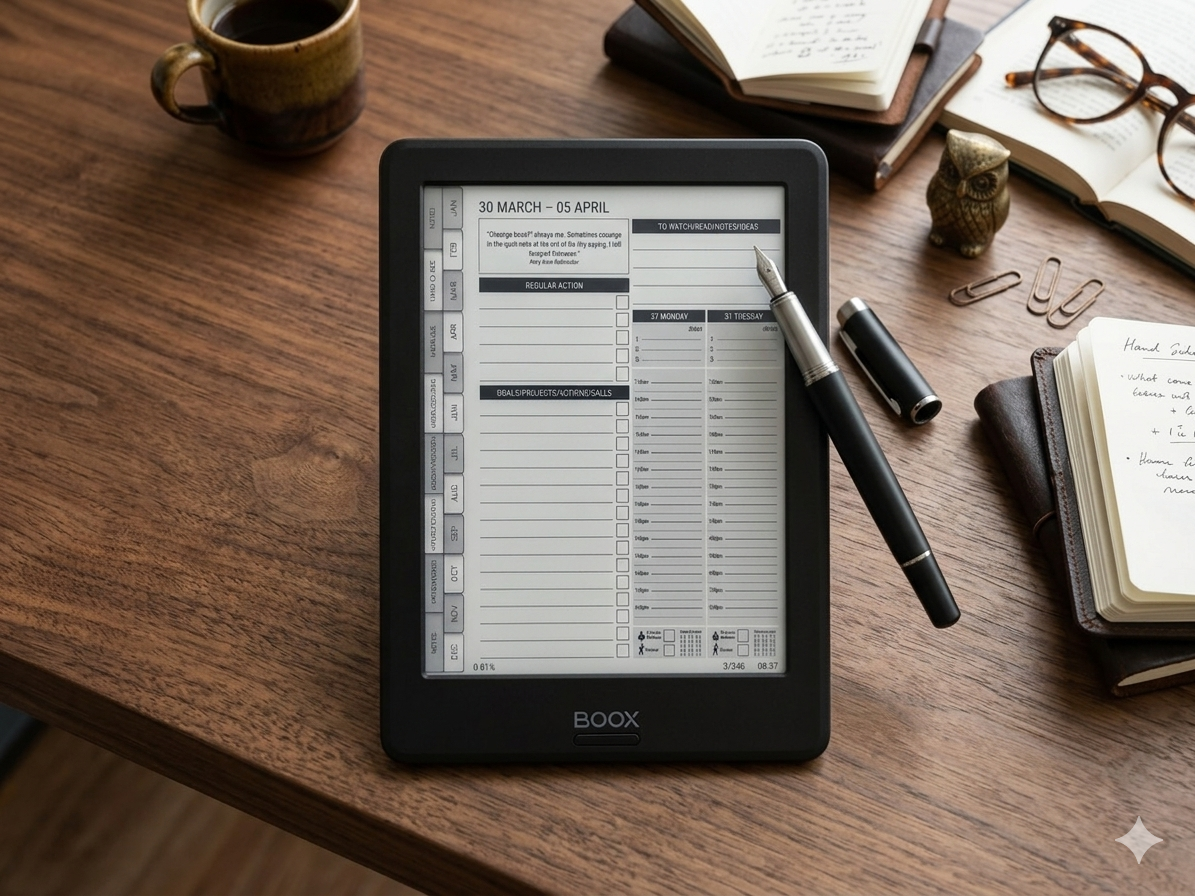
Free business planner sample

Free Business Planner

Weekly layout · instant download

Download Free


Explore other categories:
Planning & Strategy | Productivity & Time | Finance & Cash Flow | Marketing & Sales | Tools & Tech | CEO Mindset | ADHD Planning | How to start a business with no money

Everything you need to start your business with confidence — from first ideas to launch-day checklists. These posts will guide you through the messy middle and help you take action.


Free business planner sample

Free Business Planner

Weekly layout · instant download

Download Free


Business Planning & Strategy

Explore other categories:
Planning & Strategy | Productivity & Time | Finance & Cash Flow | Marketing & Sales | Tools & Tech | CEO Mindset | ADHD Planning | How to start a business with no money

Business Planning & Strategy — Build a Smarter Business

Every successful business starts with a plan. Not a 40-page document that gathers dust in a drawer, but a living system that connects where you want to go with what you actually do each week.

Whether you are launching your first business, resetting after a tough year, or scaling something that is already working, planning gives you the structure to make better decisions, stay focused on the right priorities, and stop reacting to everything that lands in your inbox.

This page brings together everything we have published about business planning and strategy — from writing your first business plan to building the systems that keep your business running smoothly.

What is business planning, and why does it matter?

Business planning is the process of setting clear goals for your business and working out how you are going to reach them. It covers your vision, your revenue targets, your marketing approach, your operations, and your finances.

For small business owners and solopreneurs, planning is especially important because you are usually doing everything yourself. Without a plan, it is easy to spend entire weeks on tasks that feel productive but do not actually move the business forward. If you have ever wondered whether you really need a business plan, the short answer is yes — but it does not need to be complicated.

Planning does not mean predicting the future. It means deciding on a direction, making your best assumptions, and building in regular check-ins so you can adjust as you go. Our 5-step framework for going from idea to execution is a good starting point if you want a simple, actionable approach.

The four pillars of a strong business plan

Whether you are writing a formal business plan for investors or a one-page plan for yourself, every good business plan covers four areas:

1. Vision and goals

Where do you want the business to be in 12 months? What does success actually look like? This is about setting specific, measurable targets you can track. Our guide to goal setting for entrepreneurs explains how to set goals that are ambitious but realistic, and our step-by-step guide to planning your business year walks you through the full annual planning process.

2. Strategy and positioning

How are you going to reach those goals? Who are your ideal customers? What makes you different? If you are just starting out, our business launch checklist covers the 10 things you need in place before you launch, and our guide on how to validate a business idea will help you test your concept before investing too much time or money.

3. Operations and systems

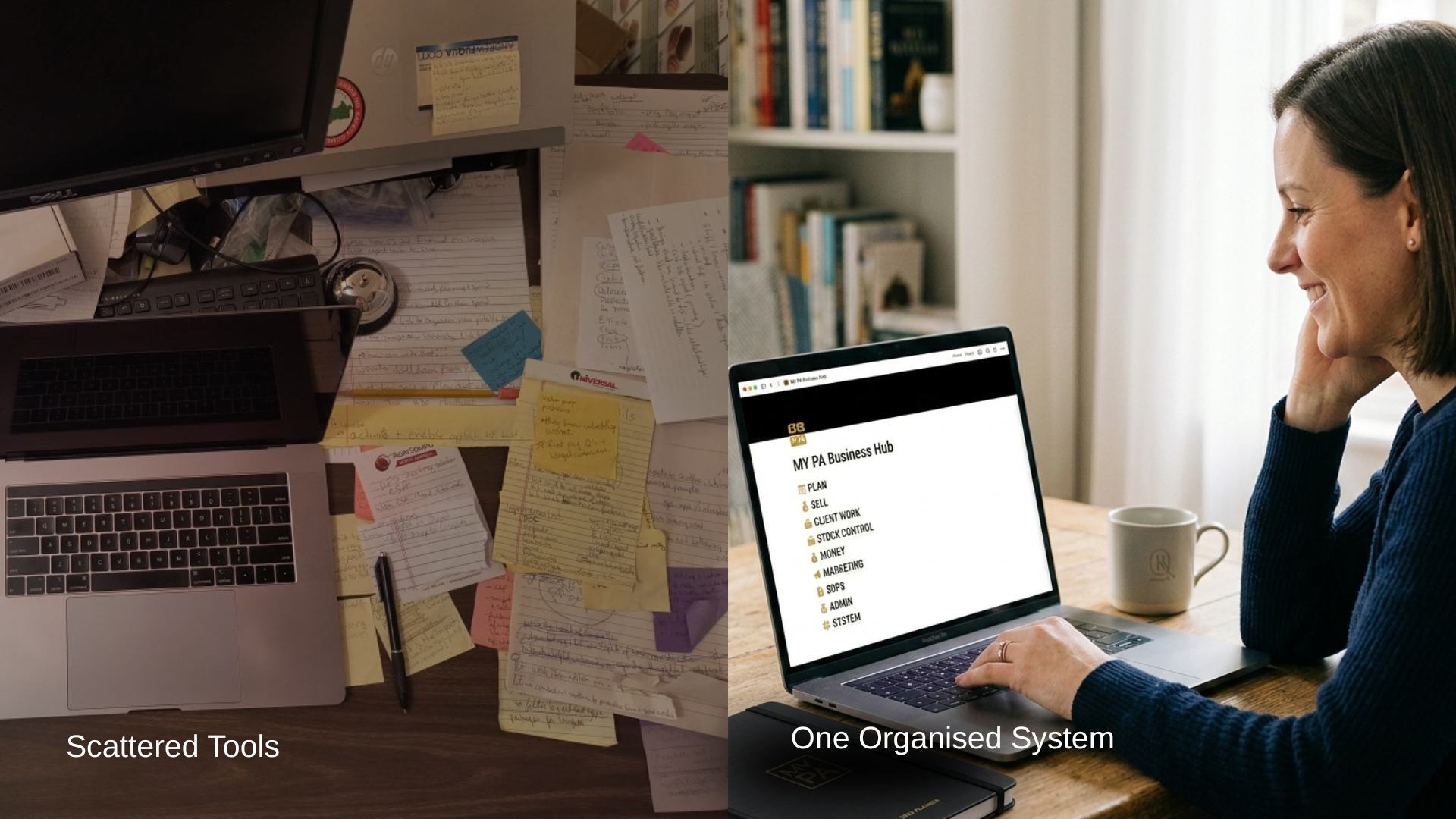
How does the business actually run day to day? The businesses that scale without burning out their founders are the ones with clear systems in place. Our article on the 5-step business operating system shows you how to build an operational backbone, and if your business currently lives in ten different apps, read why running your business in ten places is making everything harder.

4. Finances

What are your costs, revenue streams, profit margins, and cash flow? Even if numbers are not your strength, understanding the financial basics of your business is non-negotiable. Start with our guide to business plan financials made simple, then dig into cash flow 101 for small businesses and break-even explained.

How to write your business plan

If you have never written a business plan before, start with our comprehensive guide on how to write a business plan. If you want something faster, how to write a one-page business plan gives you a stripped-down version you can complete in an afternoon.

We also offer practical resources to make the process easier:

From plan to action: making it work weekly

The biggest mistake people make with business planning is creating the plan and never looking at it again. A plan only works if it connects to what you do each week.

Break your year into quarters. A 12-month goal feels abstract. A 90-day goal feels actionable. Our monthly goal-setting system shows you how to turn quarterly targets into monthly priorities.

Plan your week. Each week, decide what you will actually do to move forward. Time blocking is one of the most effective ways to protect your priorities and stop the week running away from you.

Review regularly. At the end of each week and month, review what worked and what did not. Our simple monthly reset gives you a quick process for staying on track without overthinking it.

Common business planning mistakes

After working with thousands of entrepreneurs, we see the same planning mistakes again and again. We wrote a detailed guide on 30 common small business mistakes and how to fix them, and our article on 10 mistakes entrepreneurs make when planning their year covers the planning-specific pitfalls.

Tools for business planning

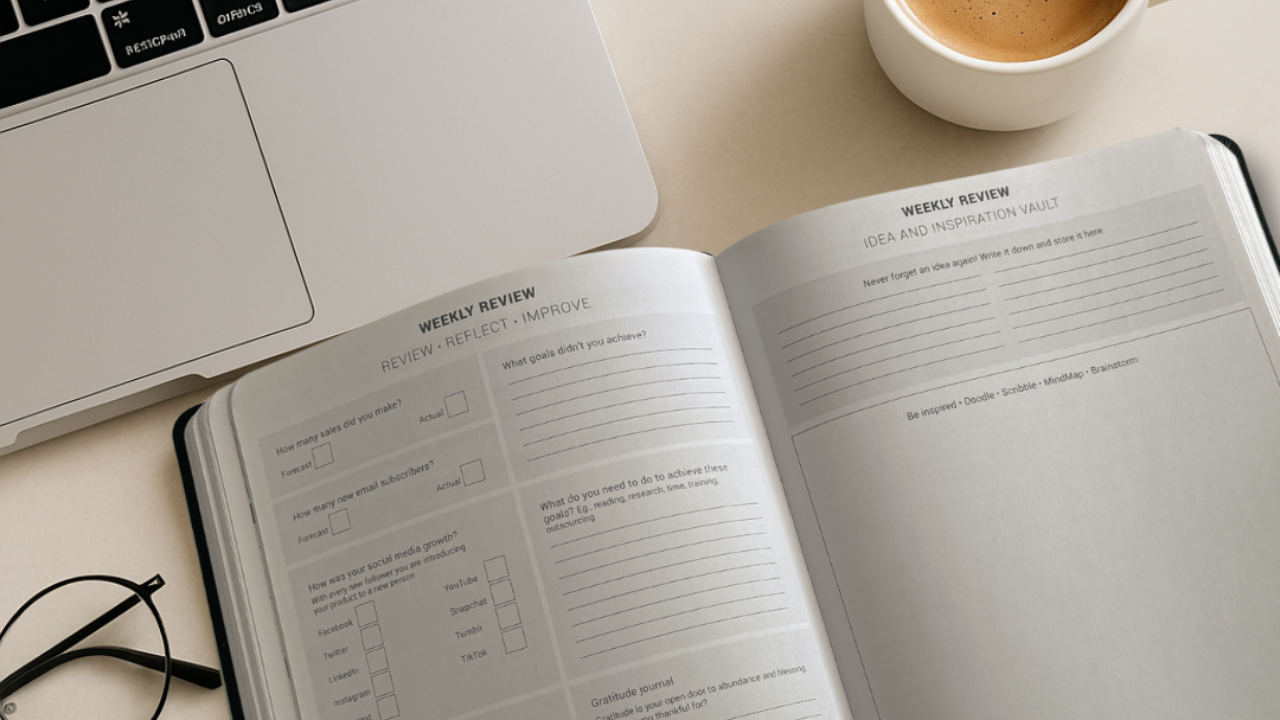
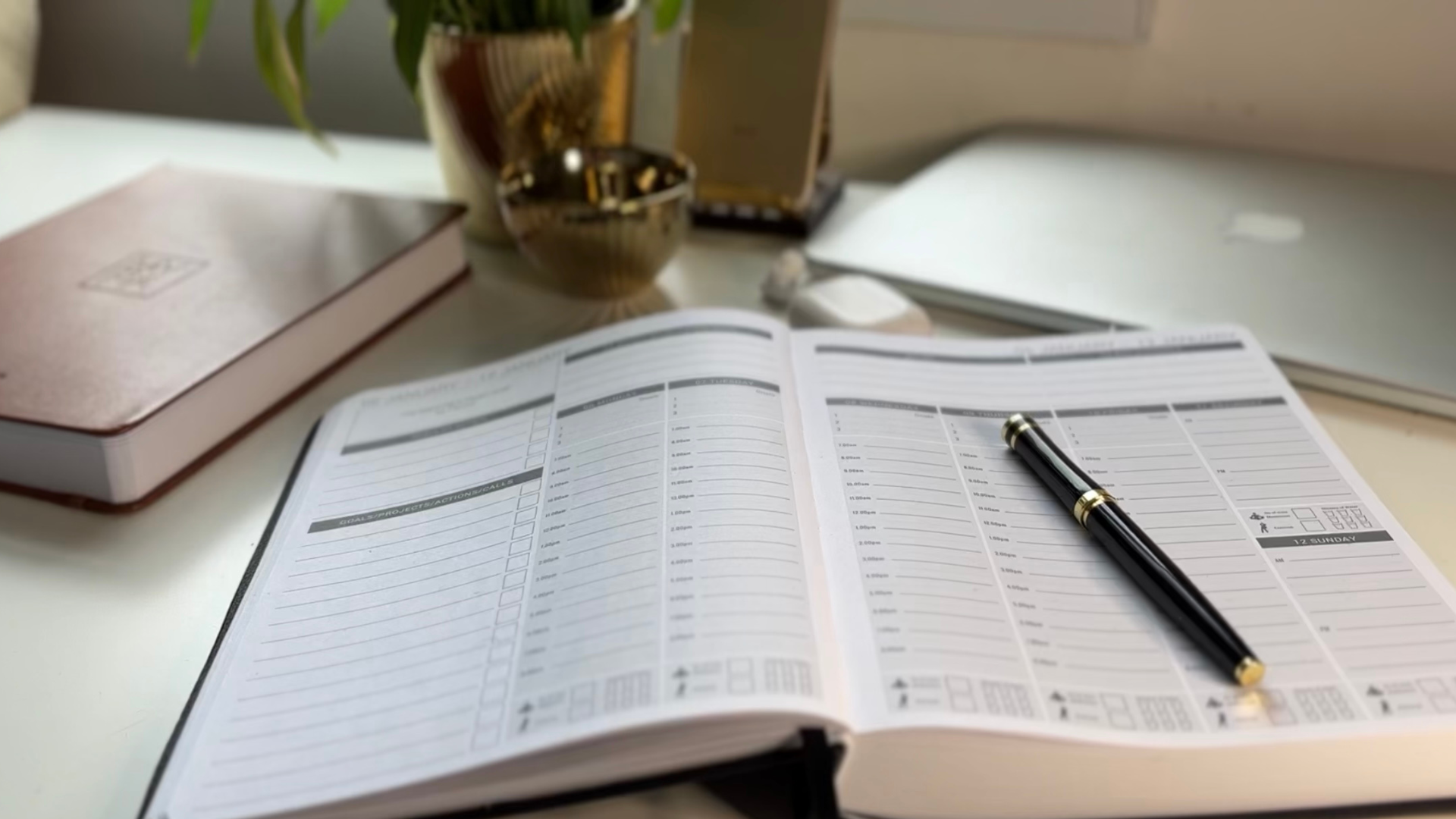
Paper planning: The MY PA Business Planner includes goal setting, project planning, time blocking, and a built-in business plan section. Read our planner comparison guide to see how it compares to other options.

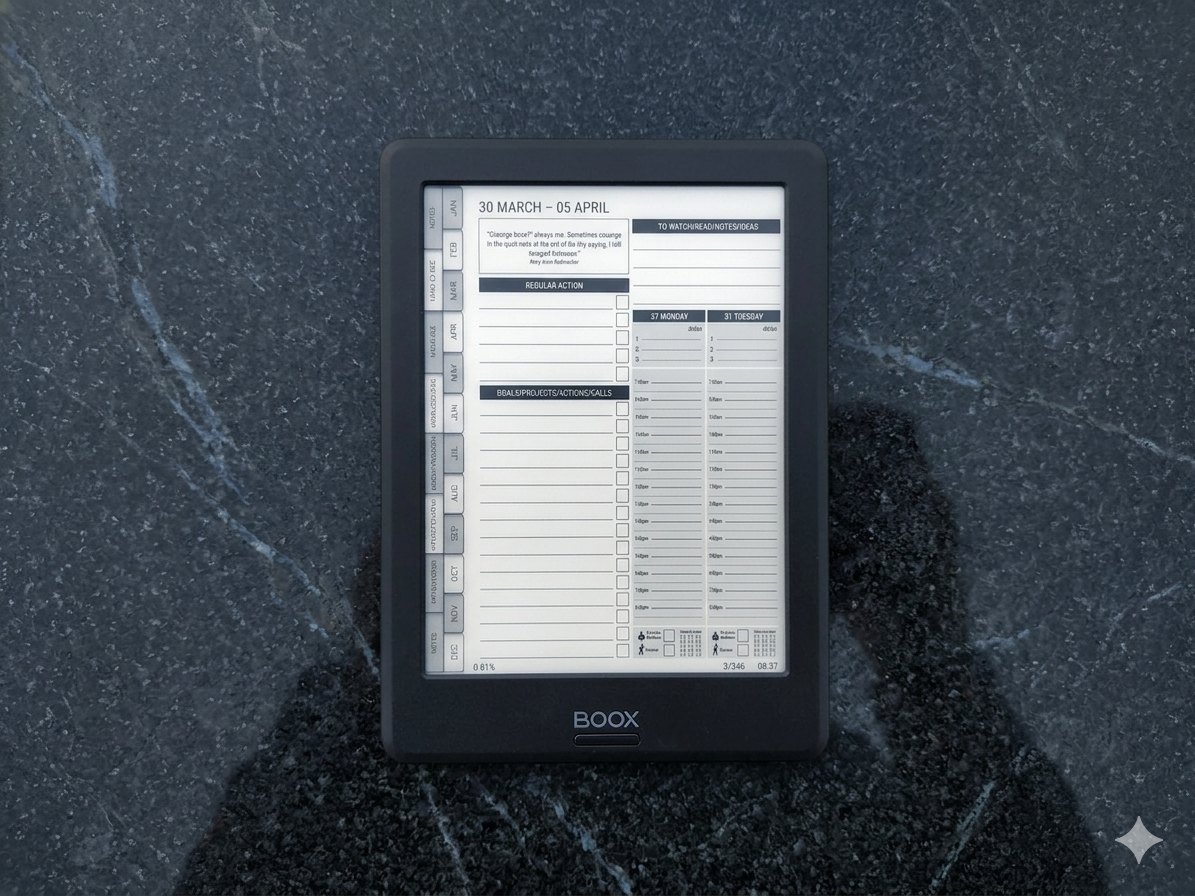
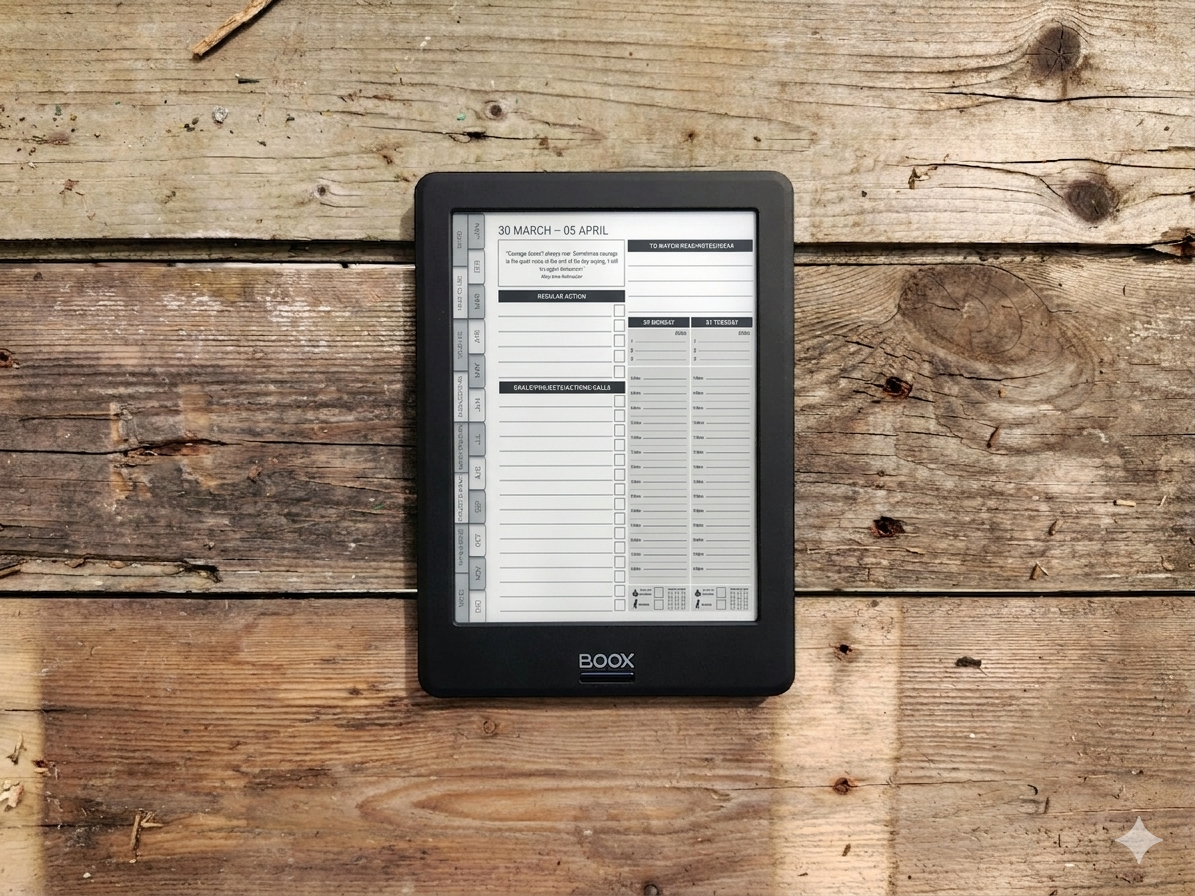
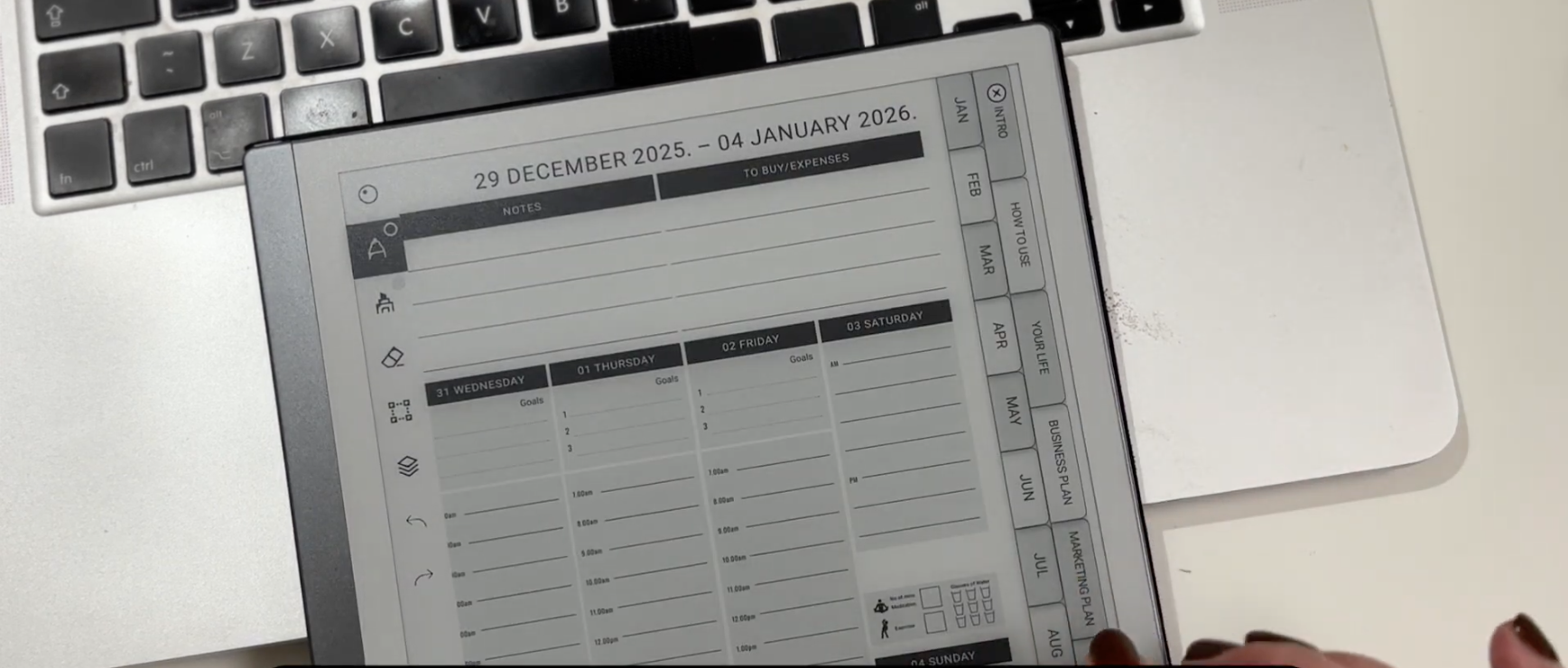
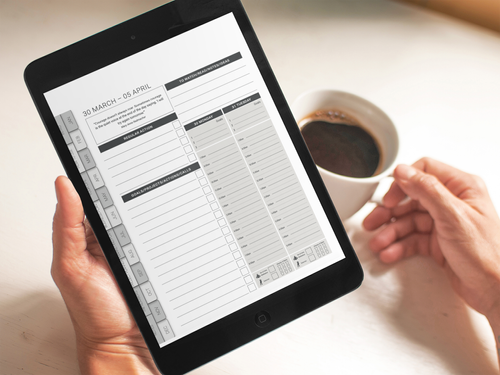
Digital planning: Our digital planner PDFs work with GoodNotes, Notability, reMarkable, Kindle Scribe, and more.

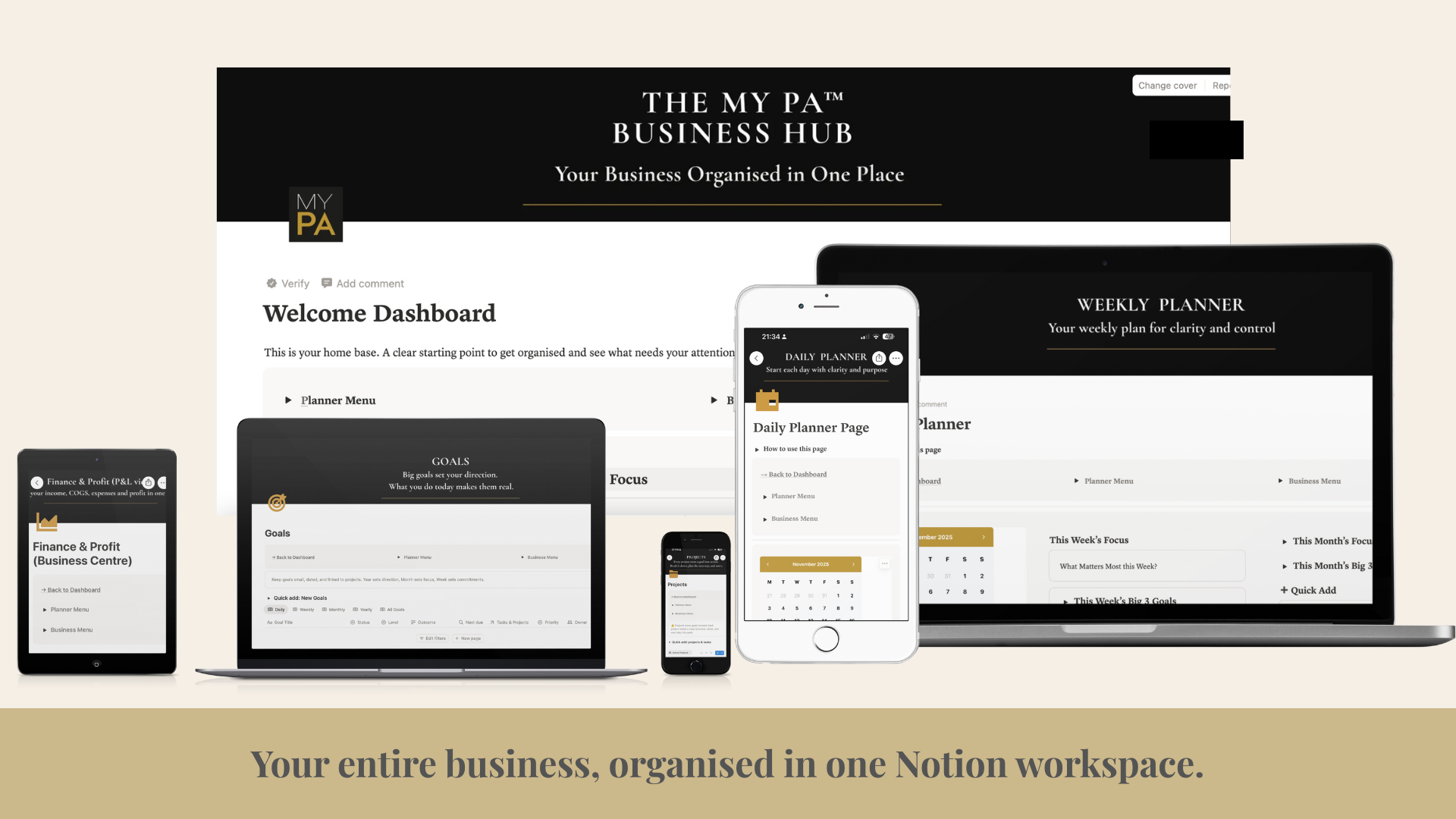
Notion: The MY PA Planning System in Notion brings goals, projects, and weekly planning into one workspace. For a full business operating system, the Business HQ adds leads, CRM, finances, and delivery tracking. Not sure where to start with Notion? Read how to use Notion for business.

You can also download our free business planner to try the MY PA system at no cost before committing.

Explore the articles below for in-depth guides on every aspect of business planning and strategy.


Hello, World!

Productivity & Time Management

 Explore other categories:
Planning & Strategy | Productivity & Time | Finance & Cash Flow | Marketing & Sales | Tools & Tech | CEO Mindset | ADHD Planning | How to start a business with no money

Do more of what matters — without burning out. These posts share productivity habits, time-blocking tips, and mindset shifts to help you reclaim your time and energy.

Free business planner sample

Free Business Planner

Weekly layout · instant download

Download Free


Productivity & Time Management — Do More of What Matters

Productivity for entrepreneurs is not about doing more. It is about doing the right things, consistently, without burning out in the process. If you have ever ended a week feeling exhausted but unsure what you actually accomplished, our article on why you feel busy but not productive explains exactly what is going on and how to fix it.

This page brings together everything we have published about productivity and time management, designed specifically for people who run their own business. No corporate jargon, no complex frameworks — just practical systems that work when you are the CEO, the marketing department, the accountant, and the customer service team all at once.

Why entrepreneurs struggle with productivity

Traditional productivity advice is designed for employees with a single job description and a manager setting priorities. As an entrepreneur, you face three problems most systems fail to address:

The priority problem. Everything feels urgent when you are the only one responsible. Without a clear system for deciding what matters most, you default to whatever shouts loudest. Our how to overcome decision fatigue guide helps you reduce the number of decisions draining your energy each day.

The switching problem. Entrepreneurs switch tasks constantly, and every switch costs focus and energy. The hidden cost of distractions explains just how much context switching is costing you.

The guilt problem. When there is always more you could be doing, rest feels like laziness. This leads to working long hours without being productive, and eventually burning out. If that resonates, read why founders feel guilty even when they work nonstop.

The core productivity systems

After years of working with entrepreneurs, we have found that productivity comes down to a handful of simple systems. You do not need all of them at once — start with whichever feels most relevant.

Weekly planning

This is the single most important productivity habit you can build. Once a week, sit down for 20–30 minutes and decide what your priorities are for the next seven days. We have two detailed guides: how to build a weekly planning ritual for getting started, and how I plan my week and my day for a real-world walkthrough. Pair this with a weekly review template to track what is working.

Time blocking

Time blocking means assigning specific tasks to specific times in your day, so you stop bouncing between everything and start making real progress. We have written extensively about this: how to use time blocking is our main guide, time blocking 101 covers the basics, and how to time block like a pro goes deeper into advanced techniques.

The daily top 3

Every morning, before you open your inbox, write down the three most important things you need to accomplish today. Not ten. Not five. Three. Our guide to the Daily Top 3 method explains why this simple habit cuts through overwhelm.

Monthly goal setting

Weekly planning works best when it is connected to clear monthly priorities. Our monthly goal-setting system shows you how to choose 2–3 priorities each month, and our simple monthly reset gives you a quick end-of-month review process.

Beating procrastination and building consistency

Even with great systems, procrastination and inconsistency trip up most entrepreneurs. We have two in-depth guides: how to beat procrastination looks at the psychology of why we delay, and how to stop procrastinating: 14 reasons why gives you specific solutions for each cause.

For building better habits and routines, read how to stick to your planning routine and our summary of key lessons from Atomic Habits.

Common productivity traps

  • Confusing motion with progress — being busy all day without moving the business forward

  • Checking email first thing and losing your best energy to other people’s priorities

  • Saying yes to everything because you are afraid of missing an opportunity

  • Perfectionism — spending three hours on something that needed 30 minutes

  • Not taking breaks and wondering why your afternoon productivity crashes

  • Planning everything and executing nothing

For a deeper dive, read 10 time management strategies that will make you more productive and the secret to a productive week.

The MY PA productivity system

Everything above comes together in the MY PA system: Plan, Focus, Execute. It is a simple three-step cycle: set your priorities, protect your time, and take action. The MY PA Planner is built around this exact cycle — available as a printed planner, digital PDF for tablets, and Notion planning system.

Hello, World!

Finance & Cash Flow

Explore other categories:
Planning & Strategy | Productivity & Time | Finance & Cash Flow | Marketing & Sales | Tools & Tech | CEO Mindset | ADHD Planning | How to start a business with no money

You don’t need to be an accountant to take control of your business finances. This section simplifies pricing, cash flow, income planning, and other essentials for sustainable growth.

Free business planner sample

Free Business Planner

Weekly layout · instant download

Download Free


Marketing & Sales Growth

Explore other categories:
Planning & Strategy | Productivity & Time | Finance & Cash Flow | Marketing & Sales | Tools & Tech | CEO Mindset | ADHD Planning | How to start a business with no money

Learn how to attract the right people, share your message, and grow yousales with integrity. From content and funnels to confidence and conversion — this is your growth hub

Free business planner sample

Free Business Planner

Weekly layout · instant download

Download Free


Digital Tools & Tech

Explore other categories:
Planning & Strategy | Productivity & Time | Finance & Cash Flow | Marketing & Sales | Tools & Tech | CEO Mindset | ADHD Planning | How to start a business with no money

Discover the digital tools, apps, and platforms that help you streamline your business, save time, and stay organised — even when you’re wearing all the hats.


Free business planner sample

Free Business Planner

Weekly layout · instant download

Download Free


Behind every successful business is a strong inner foundation. This section is all about confidence, clarity, and the mindset shifts that help you lead like a founder.

Free business planner sample

Free Business Planner

Weekly layout · instant download

Download Free


ADHD Planning

Explore other categories:
Planning & Strategy | Productivity & Time | Finance & Cash Flow | Marketing & Sales | Tools & Tech | CEO Mindset | ADHD Planning | How to start a business with no money

Planning with ADHD can feel frustrating, especially when traditional systems don’t stick. This collection brings together simple, practical ways to organise your tasks, focus your time, and actually follow through.

ADHD Digital Planner

ADHD Digital Planner

iPad · Kindle Scribe · Remarkable

View Planner

ADHD Planning: Simple Systems to Stay Organised and Get Things Done

If you have ADHD, you have probably tried dozens of planners, apps, and systems. And most of them worked for about a week before you abandoned them. That is not a personal failure — it is a design problem. Most planning systems are built for neurotypical brains, and they fall apart the moment they require sustained executive function to maintain. If that sounds familiar, our guide on how to use a planner with ADHD without abandoning it by week two is worth reading first.

This page brings together practical approaches to planning that work with how ADHD brains actually function — not against them. Every article, tool, and guide here is built around the same principle: reduce friction, increase visibility, and make the next step obvious.

Why traditional planning fails with ADHD

Traditional planners assume you will sit down every Sunday, review your goals, plan your week in detail, and then follow through on every item. That relies on exactly the executive functions that ADHD makes difficult: task initiation, sustained attention, working memory, and emotional regulation around boring tasks. We explore this in more detail in do planners help with ADHD? — the short answer is yes, but only if they are designed the right way.

What works instead

Effective ADHD planning systems share a few key characteristics:

Visual and immediate. If a task is not visible, it does not exist for an ADHD brain. The best planning tools keep your priorities in front of you at all times.

Low setup, low maintenance. A system that takes 30 minutes to set up each week will not survive. The best ADHD planning tools work even if you only spend 5 minutes with them.

Structured time. ADHD brains struggle with unstructured time. Time blocking for ADHD creates external structure so you are not relying on willpower to decide what to do next.

Forgiving. You will miss days. A good system makes it easy to pick back up wherever you left off without the guilt of empty pages staring at you.

One place, not ten. The more scattered your system, the harder it is to manage. Having one planner or one workspace that holds everything reduces the mental load.

Choosing the right ADHD planning tool

There is no single best tool — it depends on how your brain responds to different formats:

Paper planners: The physical act of writing helps many people with ADHD focus and retain information. The MY PA ADHD Digital Planner is specifically designed with simplified layouts and fewer decisions per page.

E-ink tablets: Devices like the reMarkable and Kindle Scribe offer the focus of paper without notifications. We have dedicated guides for the best ADHD planner for reMarkable 2 and Paper Pro and the best ADHD planner for Kindle Scribe. If you are deciding between devices, read our iPad vs Kindle Scribe vs reMarkable comparison for ADHD.

iPad with a digital planner: More flexible than e-ink but comes with distraction risk. Our best ADHD digital planner guide for iPad, Kindle, and reMarkable compares all the options.

Notion: For ADHD entrepreneurs who need their planning connected to their business. The advantage is everything in one place. The risk is over-building. Our Notion planning system is pre-built so you do not have to set it up yourself.

Running a business with ADHD

ADHD brings real strengths to entrepreneurship — creativity, energy, the ability to hyperfocus, and a willingness to take risks. But the administrative side of running a business can feel almost painful. Our in-depth guide to ADHD business planning covers practical strategies for managing the operational side when focus is a daily challenge.

Quick tips that help:

  • Plan for today, not next month. Focus on your top 1–3 tasks each morning.

  • Keep your planner open and visible. If it is closed in a bag, you will forget it exists.

  • Build a shutdown routine. At the end of each day, write tomorrow’s top 3 tasks.

  • Do not beat yourself up for missed days. Just start where you are.

  • Pair planning with something enjoyable — a good coffee, a favourite spot, a ritual.

Explore the articles below for more practical ADHD planning approaches, tool comparisons, and systems designed for brains that work differently.

Free business planner sample

Free Business Planner

Weekly layout · instant download

Download Free

You don’t need savings, investors, or a big idea to start a business. You need a skill, a problem to solve, and a willingness to start before you feel ready.

This guide covers everything you need to go from zero budget to your first paying customer — and then build from there. Whether you’re working a full-time job, studying, or simply looking for a way to create something of your own, this is the practical starting point.

Every article in this series is designed to help you take one clear step forward — without spending money you don’t have.

What You’ll Learn in This Guide

This hub brings together a series of focused articles, each covering a specific part of starting a business with no money:

The Complete Guide

How to Start a Business with No Money (Step-by-Step Guide)

The full roadmap — from finding your first idea to getting paying customers to building real structure. Start here.

Find Your Starting Point

Business Ideas You Can Start with No Money

Practical, realistic business ideas you can launch today with nothing but your skills and an internet connection. No fluff, no ‘passive income’ nonsense.

Get Your First Sale

How to Get Your First Customer Without Spending Money

Forget ads and funnels. Here’s how to land your first paying customer using outreach, content, and direct conversations.

Build While You Work

How to Start a Business While Working a 9 to 5

You don’t need to quit your job. You need 1–2 focused hours a day. This article shows you how to build alongside your full-time work without burning out.

Stay the Course

How to Stay Consistent When Starting a Business

Most businesses don’t fail because the idea was bad. They fail because the founder lost momentum. Here’s how to stay consistent when nobody’s watching.

Go Deeper

How to Start a Service Business (Beginner Guide)

Service businesses are the fastest way to earn money with zero upfront cost. This guide walks you through choosing, pricing, and launching your first service.

Related Resources

Once you’ve started, these guides will help you build on your progress:


Ready to Get Organised?

Starting a business is one thing. Staying on track is another. If you want a simple system to plan your goals, map your priorities, and actually follow through — explore the MY PA Business Starter Kit or browse our 2026 Business Planners.